
Thank you for visiting. We trust that you have enjoyed reading our articles.
Book Review: Twelve Ordinary Men
“Instead, speaking the truth in love, we will grow to become in every respect the mature body of Him who is the head, that is, Christ (Ephesians 4:15 NIV).
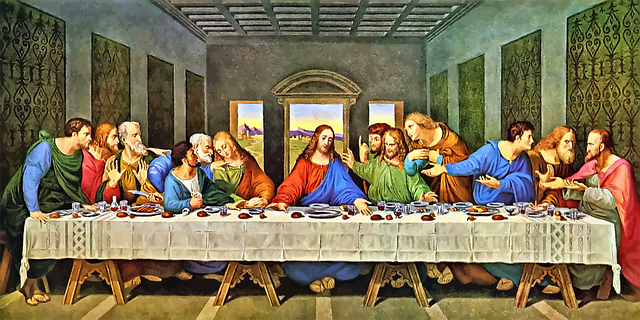
I have enjoyed reading the book, “Twelve Ordinary Men” by John MacArthur. Each chapter focused on a different disciple and blessed me with new insight to each of these men. I was particularly drawn to the chapter about John, the Apostle of Love. Throughout our lives we all find ourselves on different sides of the truth and love issue. Sometimes we want justice and sometimes we want mercy. Most of us settle on the side that best suits our purpose for the particular issue at the particular time.
However, it is a false choice to choose between truth and love. For a Christian that is growing in sanctification, the two go together. According to the book, “Zeal for the truth must be balanced by love for people. Truth without love has no decency, its brutality. On the other hand, love without truth has no character its just hypocrisy.”
Today many people are imbalanced in the matter of truth/love. Love is often given higher priority over truth. MacArthur writes, “Some are merely ignorant; others are deceived; still others simply do not care about what is true.” The author states that what they are left with is “error, clothed in a shallow, tolerant sentimentality.” This is not true love because there is a lack of truth. “Therefore, even the love they speak of is a tainted love.” Real love “does not rejoice in iniquity but rejoices I the truth” (1 Corinthians 13:6).
A key point in the book is the concept of equality of the two virtues. “The truly godly person must cultivate both virtues in equal proportions. If you could wish for anything in your sanctification, wish for that. If you pursue anything in the spiritual realm, pursue a perfect balance of truth and love. Know the truth and uphold it in love.” To know truth and love is to know Jesus. In John 14:6, Jesus reveals Himself as truth by stating, “I am the way and the truth and the life.” John clearly understood the truth and love nature of Jesus when he wrote in 1 John 4:8, “Anyone who does not love does not know God, because God is love.”
The author points to Ephesians 4 in which the apostle Paul describes the balance of truth and love as the very pinnacle of spiritual maturity. Ephesians 4:15 teaches, “Instead, speaking the truth in love, we will grow to become in every respect the mature body of him who is the head, that is, Christ.” Sanctification is essential to living out this Scripture. According to MacArthur, “Manifesting both truth and love is possible only for the mature believer who has grown into the measure of the stature that belongs to the fullness of Christ.”
We know the truth when we know Christ. His Word is the truth. We know true love when we love as Christ loves, unconditionally. The greatest truth is love and truth and love are inseparable. They are intimately related in the Great Commandment which is the true Word of God (Matthew 22:37-40).
This book provides the reader with a better understanding of Jesus, His disciples, and yourself.
Prayer: Dear God, Thank you for the twelve apostles of Jesus, and their acts to start Your church. Please help us to continue to advance Your kingdom on earth. Amen.
Meet the Author
Todd Shupe is a Men’s Ministry Specialist through the General Commission of United Methodist Men and is in training to be a Certified Lay Minister through the Louisiana Conference of the United Methodist Church. He currently serves as the President of the Baton Rouge District of United Methodist Men and is a Board Member for Gulf South Men and serves on the Action Team for The Kingdom Group. He is a volunteer for the Walk to Emmaus, Grace Camp, and Iron Sharpens Iron. Todd resides in Baton Rouge, Louisiana.
We welcome your comments below.
Liked this post?
Read more below or search for more topics...
-
Acceptance is not Approval
Acceptance is not Approval “Accept each other just as Christ has accepted you so that God will be given glory” (Romans 15:7 NLT). The blood of Jesus provides us the opportunity for forgiveness of our sins. Our sins will be cast as far as the east is from the west once we earnestly repent and ask His forgiveness. However, our society has slowly tried to redefine what is and is not a sin. In the political world, these are known as wedge issues that force people to one side or the other. By design, there is no common ground. Similarly, the enemy... -
The Lost Fruit of Kindness

The Lost Fruit of Kindness “But the fruit of the Spirit is love, joy, peace, forbearance, kindness, goodness, faithfulness, gentleness, and self-control. Against such things there is no law” Galatians 5:22-23A Historical Foundation of CharacterAccording to the Mount Vernon website, he wrote a copy of the 110 Rules of Civility in his schoolbook when he was about 14 years old. These maxims originated in late 16th-century France and were widely circulated during Washington’s time. This exercise, now regarded as a formative influence in the development of his character, included guidelines for behavior in pleasant company, appropriate actions in formal situations, and... -
What Can Grasshoppers and Mustard Seeds Teach Us About Fear?
What Can Grasshoppers and Mustard Seeds Teach Us About Fear? “The Lord himself goes before you and will be with you; He will never leave you nor forsake you. Do not be afraid; do not be discouraged” (Deuteronomy 31:8 NIV). Fear is our natural response to physical or emotional danger. Fear can be healthy to help us avoid dangerous situations. We often fear situations that are not as serious as we perceive, which can trigger an extreme, and often unnecessary, fight-flight-or-freeze response. As a result, we may find ourselves avoiding challenges that could benefit them in the long run or hanging back during social...