“A voice said to him, Why are you here, Elijah? He replied, “I have been most zealous for the Lord, the God of hosts, but the Israelites have forsaken your covenant. They have destroyed your altars and murdered your prophets by the sword. I alone remain, and they seek to take my life” (1 Kings 19:13-14 NIV).
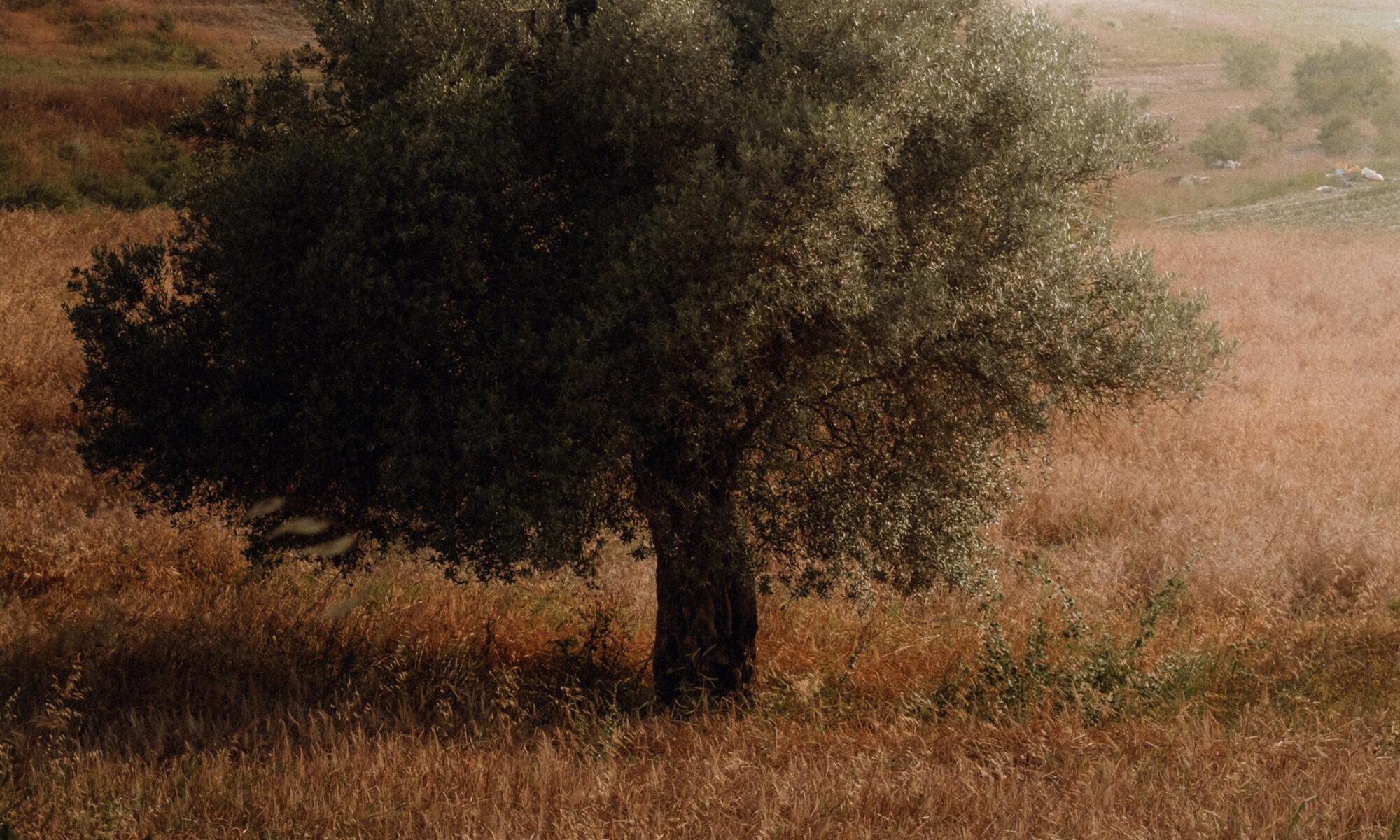
The broom tree (or rotem in Hebrew) is a desert shrub that grows across Arabia and throughout the Judean wilderness. Its deep roots draw in the moisture of land that is otherwise barren. In the Bible, desert shrubs such as the broom tree appear in moments of despair as well as times of divine encounter.
Chapter 21 of Genesis describes a young mother, Hagar, who was sent away into the wilderness. With little to sustain her, she wandered until her water supply completely ran out. Placing her son, Ishmael, under a broom tree to die, she then sat down and wept. Job describes the broom tree as a place of desolation, ruin, and abandonment (Job 30:3-4). The Psalmist connects the broom tree with mourning, distress, and punishment (Psalm 120).
For many Christians the broom tree is most often associated with Elijah. Elijah is first mentioned in 1 Kings 17, where he proclaimed a drought as penalty for the evil deeds of the kings of Israel.
Elijah later presented himself to King Ahab, telling him to summon the prophets of Baal and Asherah on Mount Carmel, along with all the people of Israel. He confronted the people and told them that if they prepared a sacrifice and called on Baal, he would prepare a sacrifice and call on the Lord. Whichever caught fire would then demonstrate who was the true God. The worshippers of Baal prepared their sacrifice and called upon him from morning until noon, with no answer.
Then Elijah rebuilt the altar of the Lord, prepared the sacrifice, and poured four jugs of water on it. He called upon the Lord, and the Lord answered him by sending down fire to consume the altar.
After this, the prophets of Baal were seized and killed. When King Ahab told his wife Jezebel what Elijah had done, she vowed to kill him. Elijah was terrified and fled into the desert, where he prayed for the Lord to take his life, then fell asleep under a broom tree. A messenger from the Lord came to him twice, urging him to eat and drink. After doing so, he journeyed 40 days in the wilderness to Mt. Horeb, where he hid in a cave. Then…..
“A Voice said to him, ‘Why are you here, Elijah?’ He replied, ‘I have been most zealous for the Lord, the God of hosts, but the Israelites have forsaken your covenant. They have destroyed your altars and murdered your prophets by the sword. I alone remain, and they seek to take my life.’” (1 Kings 19:13-14). Elijah was anxious, angry, and tired.
The good news is that God met with Elijah at the broom tree. He also revealed himself to Moses in a thorny acacia. He rescued Isaac by revealing a young ram whose horns were caught in a bush so Abraham could sacrifice it instead of his son, Isaac. God shows up in some very thorny situations, even today and even for you and me.
The lesson of the broom tree is that sometimes when God meets us in the desert times of our lives, God provides us relief like a broom tree. The shade is not enough to last us forever, but enough to help us take the next steps. It is enough for us to sit under for a few minutes to draw strength for the next step and then the next step. The journey is not always short, sometimes it takes a long time to get through it. Elijah’s journey took over a month to go from Judah to Mt. Horeb in the hot Egyptian desert. When he met God at Mt. Horeb, he was still struggling, still searching for a solution to his problem. God did not make his circumstances disappear. God did not give him much sympathy. However, God did give Elijah direction, sustenance for the road, a renewed purpose and later, in that same chapter in 1 Kings, a companion on the road—all things that kept Elijah going.
Please come back next month as unpack more lessons in-between a broom tree and tamarisk tree in Part 2.
 Tear A Hole In The Roof! “One day Jesus was teaching, and Pharisees and teachers of the law were sitting there. They had come from every village of Galilee and from Judea and Jerusalem. And the power of the Lord was with Jesus to heal the sick. Some men came carrying a paralyzed man on a mat and tried to take him into the house to lay him before Jesus. When they could not find a way to do this because of the crowd, they went up on the roof and lowered him on his mat through the tiles into the middle...
 Can I Show Christ In My Anger? “In your anger do not sin: Do not let the sun go down while you are still angry, and do not give the devil a foothold” (Ephesians 4:26-27 NIV). We typically associate anger as a “bad thing.” We know that senseless, stupid anger and wrath are “works of the flesh.” We are drawn in to the TV news when they show clips of somebody expressing their anger, particularly if we have never seen the person express such an emotion. It generates a raw rubber necking response like an accident on the side of the road.Anger is not...
 The Ministry of Presence “Then they sat on the ground with him for seven days and nights. No one said a word to Job, for they saw that his suffering was too great for words” Job 2:13 (NLT). This is certainly not a news flash, but people are always in a hurry. We rush to work, ball games, and even to church. But if we are always in a hurry, then we will miss opportunities to be a good listener because listening requires time, focus, and listening. When we are always in a rush, we are unable to have good conversations, and we certainly...